Chapter 1: What is Science?
Introduction:
This chapter explores the unique nature of science and its distinction from other fields of inquiry. Okasha examines the meaning of key concepts such as theory and experiment, tracing the historical evolution of science and highlighting pivotal figures and events.
Key Themes:
- Evolution of Scientific Thought: Modern science emerged between 1500 and 1750, with significant contributions from figures such as Copernicus, Galileo, and Newton.
- Distinguishing Science from Pseudoscience: Influenced by Karl Popper, Okasha emphasizes falsifiability as a criterion for scientific theories.
- Scientific Progress: Science evolves through empirical observations, theoretical refinements, and paradigm shifts.
Chapter 2: Scientific Inference
Introduction:
Okasha discusses different types of reasoning used in science, particularly induction, deduction, and inference to the best explanation.
Key Themes:
- Deductive Reasoning: A logical structure where conclusions necessarily follow from premises.
- Inductive Reasoning & Hume’s Problem: The challenge of justifying inductive generalizations, given their dependence on past observations.
- Inference to the Best Explanation: Selecting theories based on their explanatory power rather than absolute proof.
- Probability in Science: The role of probability in scientific predictions and statistical interpretations.
Chapter 3: Explanation in Science
Introduction:
Scientific explanations provide understanding through causal mechanisms and general laws.
Key Themes:
- Hempel’s Deductive-Nomological (D-N) Model: A framework where general laws and initial conditions predict observed phenomena.
- Limitations of D-N Model: Issues of symmetry and relevance in scientific explanations.
- Causal Explanation: The importance of identifying underlying mechanisms rather than just describing patterns.
- Limits of Explanation: Some phenomena remain only partially explained due to theoretical and methodological constraints.
Chapter 4: Realism and Anti-Realism
Introduction:
A major debate in the philosophy of science concerns whether scientific theories describe reality or are merely tools for prediction.
Key Themes:
- Scientific Realism: The belief that scientific theories describe an objective reality.
- Anti-Realism & Instrumentalism: The view that theories are useful but do not necessarily correspond to actual entities.
- The “No Miracles” Argument: Realists argue that the success of science suggests its approximate truth.
- Challenges to Realism: Competing theories can explain the same observations, leading to skepticism about scientific objectivity.
Chapter 5: Scientific Change and Revolutions
Introduction:
Okasha explores how science evolves through gradual progress and revolutionary paradigm shifts, influenced by Thomas Kuhn’s theory of scientific revolutions.
Key Themes:
- Normal Science vs. Revolutionary Science: Most science operates within established paradigms until anomalies force paradigm shifts.
- Paradigm Shifts & Incommensurability: New paradigms often replace old ones, but they may not be directly comparable.
- Criticism of Kuhn: Some argue that science is more cumulative than Kuhn suggests, with old ideas influencing new ones rather than being completely discarded.
Chapter 6: Philosophical Issues in Science
Introduction:
Different scientific disciplines face unique philosophical challenges.
Key Themes:
- Physics: The nature of time, space, and quantum mechanics.
- Biology: The problem of defining species and understanding evolutionary processes.
- Psychology: The mind-body problem and the nature of consciousness.
- Reductionism vs. Holism: Whether scientific explanations should focus on fundamental parts or holistic systems.
Chapter 7: Science and Its Critics
Introduction:
Science has faced criticism from sociological, feminist, and postmodern perspectives.
Key Themes:
- Social Constructivism: The argument that science is shaped by social and historical contexts rather than pure objectivity.
- Feminist Critiques: Challenges to historical biases in scientific inquiry and calls for inclusivity.
- Postmodernism and Relativism: The view that scientific knowledge is just one of many ways of understanding the world.
- Public Trust in Science: Science’s credibility depends on transparency, accountability, and ethical considerations.
Conclusion:
Okasha's Philosophy of Science: A Very Short Introduction provides an accessible yet deep exploration of fundamental questions in the philosophy of science. By examining the nature of scientific reasoning, explanation, and realism, the book highlights the complexities of scientific progress and its philosophical implications. Okasha's insights remain relevant in debates on the reliability, limits, and societal impact of scientific knowledge.
Frequently Asked Questions
Q: What is the scientific method?
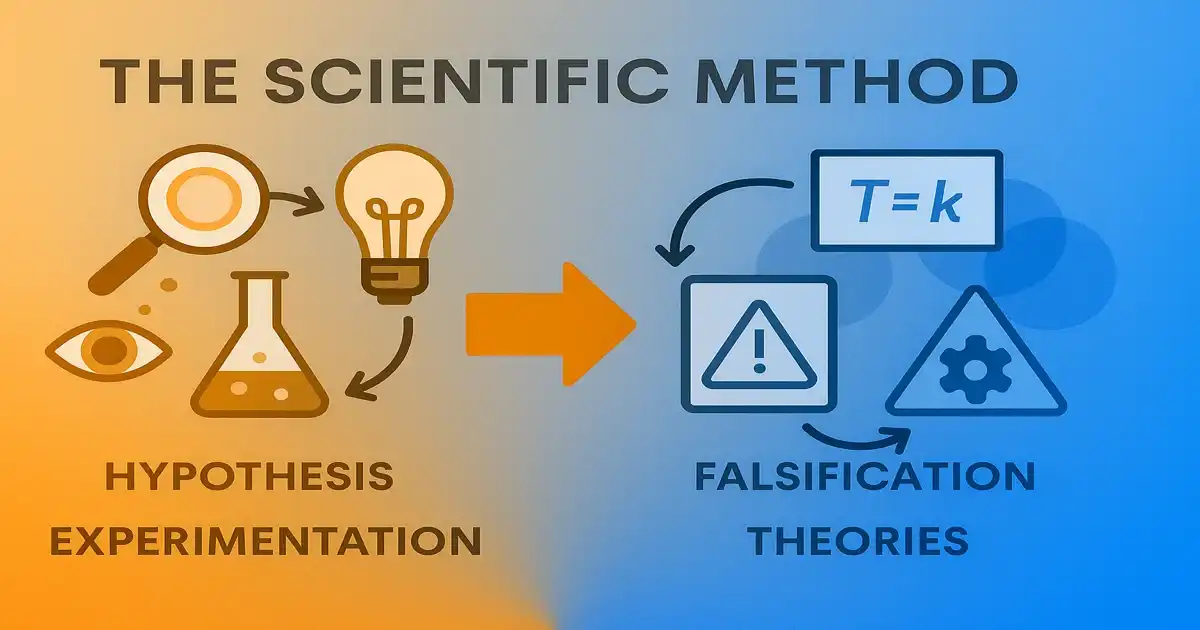
The scientific method is a systematic approach to investigating phenomena: observe patterns, form hypotheses, design experiments testing predictions, collect data, analyze results, and draw conclusions. It emphasizes empirical evidence over authority, reproducibility, falsifiability, and revision based on new evidence. The method provides structured framework for acquiring reliable knowledge while recognizing all conclusions remain tentative and subject to future revision.
Q: What is Popper's falsifiability criterion?
Karl Popper argued scientific theories must be falsifiable—capable of being proven wrong through observation. Theories making no testable predictions aren't scientific. For example, "all swans are white" is falsifiable (finding one black swan disproves it); "God exists" isn't falsifiable by observation. Falsifiability distinguishes science from non-science, though critics note practical complexities make strict application difficult.
Q: What are paradigm shifts according to Kuhn?
Thomas Kuhn argued science progresses through paradigm shifts—revolutionary changes replacing one theoretical framework with another incompatible one. Normal science works within paradigms solving puzzles; anomalies accumulate until crisis triggers revolutionary shift to new paradigm. Example: Newtonian physics replaced by Einstein's relativity. Kuhn challenged cumulative progress view, showing scientific change involves conceptual upheavals, not just adding knowledge.
Q: What is the problem of induction in science?
The problem of induction (David Hume) questions logical justification for inferring general laws from specific observations. Even infinite confirming observations don't guarantee the next will conform. Science relies heavily on induction (generalizing from experiments) but lacks logical foundation proving future will resemble past. Philosophers debate whether induction can be rationally justified or remains pragmatically useful but logically unsound.
Q: What is scientific realism vs. anti-realism?
Scientific realism claims successful theories accurately describe unobservable reality—electrons, quarks, fields truly exist as described. Anti-realism argues science predicts observations reliably but theories about unobservables are merely useful fictions. Realists believe science discovers truth about the world; anti-realists believe it provides empirically adequate models without necessarily capturing underlying reality. The debate remains unresolved.
Q: How does science differ from pseudoscience?
Science emphasizes: empirical testing, falsifiability, replicability, peer review, changing conclusions based on evidence, and admitting uncertainty. Pseudoscience typically: resists testing, makes unfalsifiable claims, relies on anecdotes over systematic data, lacks peer review, refuses to revise beliefs despite contrary evidence, and claims absolute certainty. Examples of pseudoscience include astrology, homeopathy (beyond placebo), and most conspiracy theories. The boundary isn't always sharp.
Further Reading
Explore authoritative sources on philosophy of science:
- Philosophy of Science on Stanford Encyclopedia - Comprehensive academic analysis of scientific method and epistemology
- Karl Popper and Falsificationism - In-depth exploration of Popper's philosophy of science
- Thomas Kuhn and Scientific Revolutions - Understanding paradigm shifts and scientific progress
- Philosophy of Science Association - Professional organization with journals and resources on scientific philosophy
Related Reading
If you found this book insightful, you might also enjoy:
- Mental Habits of Critical Thinking by Maxim Kiselev - Cognitive biases and falsification principles
- Meditations by René Descartes - Foundational work on epistemology and rational inquiry
- Skepticism by David Hume - Critique of induction and causal reasoning
- I Knew It All Along by Eliyahu Goldratt - Scientific approach to problem-solving and constraints
- The Jedi Way by Maxim Dorofeev - Evidence-based approach to productivity and cognitive science